


Jan
14
Robben Island – hopeful improvement on the horizon?
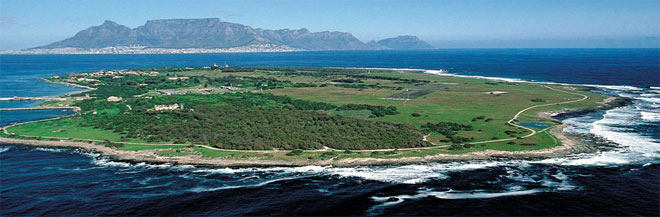 In December last year, Tourism Update ran a ‘Letter to the Editor’ from Francoise Armour, Director of Tours du Cap, who highlighted many problems with the tourism experience being offered at Robben Island Museum (RIM). Her letter elicited a huge response, with almost 30 tour operators echoing her sentiments. We sent this feedback to the CEO of Robben Island Museum, Sibongiseni Mkhize to get his response.
I would like to sincerely apologise for the delay in responding to the letter from the tour operator who had a bad experience while on a visit to Robben Island. Her concerns, observations and comments are being taken seriously by the management of the museum. It is through comments like these that the museum will be able to improve its customer service. I have also taken note of the comments by the readers, the majority of whom have a generally negative view of the Robben Island experience. RIM is conscious of the implications of a negative tour experience to the rest of the tourism industry.
I have personally observed, since I joined Robben Island Museum in November 2010, that the institution is abnormal and that this has to do with its history. The current management is busy addressing the situation. It is for that reason that we have adopted an approach of not being defensive but rather to try and steer the organisation in the right direction.
I wish the writer of the letter and the other comments could have appreciated some of the progress that has been made. I am sure they will appreciate that they no longer hear about mismanagement of funds and the personnel going on strike. Those problems have not just disappeared on their own. The reason they are no longer dominating the life of the museum is due to the actions and the attitude of the current management. These are some of the deep-seated problems that the current management inherited and it is reasonable to expect that it will take time to eliminate or mitigate some of them. As management we are committed to improve customer service. We have demonstrated over the past three years our determination to rid Robben Island of fraud and corruption by dismissing officials who were engaged in irregular activities.
The Council and Management of Robben Island Museum have resolved that a new business model has to be developed. The current model has proved to be unresponsive to the needs of a unique heritage site which is also a tourist destination. The new model also seeks to address the ways ferries are operated. Over the years the tourists and members of the public in general have tended to associate the Robben Island experience with the ferry and not the core business of the museum which is the conservation of a unique, multi-layered historical and heritage landscape. The aim is to introduce the new model in 2014.
The museum has observed during its study of other islands on the African continent that transportation is handled differently, and that there is more focus placed on the interpretation of the sites. Robben Island seeks to do the same by reviewing its narrative to ensure that it is inclusive, holistic and balanced, and also to implement a new visitor management plan in line with its Integrated Conservation Management Plan (ICMP). Management is already putting plans in place to train tour guides and to move towards professionalising tour guiding on Robben Island. This will address the challenges of both the bus and island tour as outline by the writer. In addition, RIM has identified the need to partner with external parties to try and improve the booking and touring experience by employing the use of technology. Plans to revamp the website are being finalised. The website will be launched on March 1. It will be more interactive than the current website and will include a virtual tour.
One of the weaknesses has been the museum’s failure to share its plans, the context of its problems and the future outlook with the tourism community. The museum seeks to address that through stakeholder meetings so that our partners have an appreciation of our challenges and successes, and can identify the roles they can play in taking Robben Island forward into a better future.
Perhaps, at this point let me address your questions.
- The management is aware of some of the challenges with the ticketing system and have weekly meetings with the service provider to ensure that they are addressed. However, there is a difference between ticketing and boarding procedures. As a museum we have always made sure our systems respond to the reasonable needs of our clients. From what the writer says I find it difficult to understand because nowhere does she says legitimate tourists have been turned back because of the ticketing system or the boarding procedures. However, I accept the problem of the photographers. Their service gives Robben Island a bad name. I wish to state categorically that they are not contracted by Robben Island Museum to take photographs. A few years ago the museum tried to remove them but they lost the matter in court because the jetty is not owned by the museum. The matter is receiving attention from the current management so that photography, just like tour guiding, is properly professionalised.
- The role of our Information Officers is being reviewed in order to deal with the bottlenecks. This will include officials walking up and down the queues to assist people and also making announcements when the ferry docks at the jetty on the island instead of announcing when people are already out outside the ferry. We are also planning to enhance the front-line so that there is co-ordination between ticket sales, information and boarding.
- State of the island: I wish to state unequivocally that the writer did not give a fair reflection of the current state of the island. The management of the island inherited a historical problem where the island was neglected by the Department of Public Works. In 2013, RIM management decided to take over the maintenance function and the results are visible for everyone to see. If one compares how the island looks now with how it looked in 2011 and 2012, there is a big difference. The toilets, which were also part of the responsibilities of the Department of Public Works, were renovated in December to ensure that the RIM infrastructure could cope with the demand. We must also not lose sight of the fact that the infrastructure was not designed to carry large volumes of people, hence the occasional challenges.
- I think I have already pointed out above that we are aware of the problem of tour guiding and measures are being put in place to address it. However, I must also state that there are tourists who have praised Robben Island’s tour guilds. The reality is the RIM is dealing with the question of historical interpretation which always presents challenges of subjectivity.
- The blatant soliciting of tips is unacceptable. RIM management will introduce a “mystery tourist” as a way of stamping down on this practice. Those caught will be dealt with harshly.
- The perception that tourists are rushed relates the current tour offering model which is configured so that it’s synchronised with the times of the boat. Our proposed Business Model seeks to address that by proposing a variety of tour offerings, and some of those will include visitors spending more time on the island if they wish to do so.
- The island has information boards and the harbour wall has been animated. Theme-based exhibitions have been installed inside the prison so that tourists do not have to rely on tour guides. However, I do take the point about embracing technology and we are working on it.
- The unreliability of the ferry service is linked to the business decisions which were taken by the museum in the past, which was to assume responsibility for transportation while not procuring the right vehicles to do so. It has become apparent that running this service with one catamaran is not ideal. Management is currently reviewing proposals from the shipping industry on how best to run this service. This could mean procuring another ferry to complement the existing fast ferry or to partner with the private sector in order deliver this service. The events of December 2013 have pointed clearly to a need for a new ferry operating model. However, I need to state that while the RIM ferry had broken down in December, management ensured that service was not interrupted by sourcing private boats. I wish to also state that some of the ferry breakdowns have not been due to mechanical faults; there have been instances in which sabotage has taken place especially during busy times of the year.
In conclusion, I wish to thank you and the author of the letter, as well as the other contributors to the discussion, for continuing to show interest in Robben Island.
Sibongiseni Mkhize, CEO, Robben Island Museum